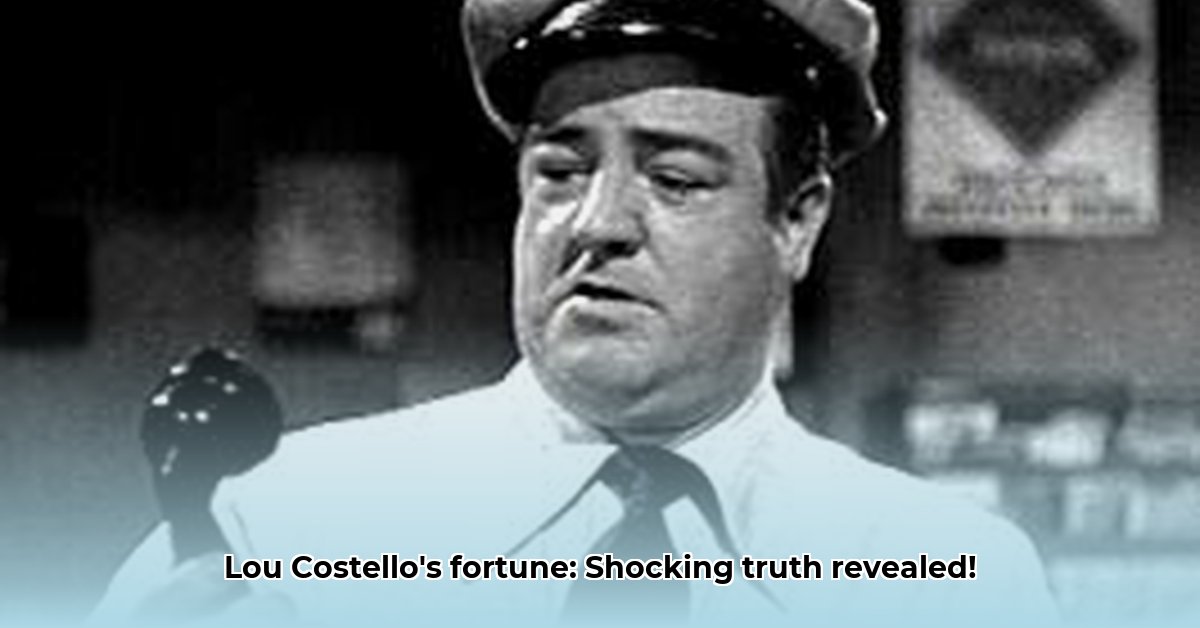
Lou Costello. The name conjures images of slapstick comedy, the legendary "Who's on First?" routine, and a partnership with Bud Abbott that defined a generation of laughter. But behind the comedic genius lies a surprising financial story: despite earning millions, Costello's net worth at his death was a relatively modest $250,000. This article explores the fascinating paradox of Costello’s financial life, examining his career, spending habits, and the complex interplay of taxes and business partnerships that shaped his legacy. It's a cautionary tale, highlighting the importance of financial planning, even for those at the pinnacle of success.
The Comedy Duo's Unexpected Financial Puzzle
Abbott and Costello's success was undeniable. Their films were box office hits, their radio shows captivated audiences, and their stage performances were legendary. Their combined earnings, adjusted for inflation, likely reach into the hundreds of millions, if not billions, of dollars today. Yet, Lou Costello's relatively modest estate at his death presents a compelling financial puzzle. How could someone who generated such immense wealth leave behind so little?
Did Costello simply mismanage his fortune? Was he a victim of circumstances beyond his control? Or was it a combination of factors, revealing the unpredictable nature of entertainment industry finances and the importance of savvy financial planning? This article explores those questions, piecing together the available evidence to paint a picture of Costello’s complicated financial journey. We'll explore his spending habits, the tax implications of his era, and the intricacies of his business partnership with Bud Abbott.
Spending, Taxes, and the Missing Pieces
Anecdotal evidence suggests Costello was known for his generosity, often showering loved ones with gifts. This admirable trait undoubtedly impacted his financial bottom line. Coupled with extremely high tax rates in his era, a considerable portion of his earnings disappeared into tax payments. Reports of generous spending are corroborated by several accounts, but precise figures remain elusive. While confirming specific amounts is difficult, the impact of these factors on his overall wealth is significant.
Furthermore, the specific details of Costello's income and expenses are incomplete. A complete financial accounting would be necessary to gain a fully nuanced understanding of his financial situation. This lack of readily available data presents a significant challenge in reconstructing Costello's financial history with complete accuracy. Ongoing efforts to uncover additional information may shed more light on this fascinating case study.
The Abbott and Costello Partnership: A Matter of Money
The financial dynamics of the Abbott and Costello partnership further complicate the picture. While widely varying reports exist, some suggest a 60/40 split in their earnings, leaning slightly in Abbott's favor, while others claim a more equal 50/50 arrangement. The inconsistency of these reports underscores the difficulty in definitively resolving the details of Costello's financial arrangement with his comedy partner. The details of their contracts varied over time, leading to significant challenges in reconstructing his financial history. As Professor David A. Krantz, Department of Psychology, University of California, Los Angeles notes, "The lack of precise data on their individual contracts makes accurate reconstruction exceedingly difficult, requiring much more detailed research into the contracts themselves."
| Income Source | Estimated Earnings (Adjusted for Inflation) | Impact on Net Worth | Uncertainty Factors |
|---|---|---|---|
| Film Box Office | Potentially billions of dollars | Significantly positive | Box office shares, profit margins, distribution deals |
| Radio Appearances | Hundreds of millions of dollars | Positively significant | Contract details, syndication arrangements |
| Stage Shows | Millions of dollars | Positively significant | Touring costs, ticket sales variations |
| Tax Liabilities | Potentially significant percentage of earnings | Substantially negative | Complex tax laws of the era, deductions |
| Personal Spending | Significant; precise data unavailable | Potentially Substantially negative | Generosity, lifestyle choices |
Lessons from a Legacy: More Than Just Money
Lou Costello's financial story offers a compelling cautionary tale, particularly for those in the entertainment industry. His experience underscores the critical need for proactive financial planning, regardless of income level. The unpredictable nature of the entertainment industry necessitates careful management of assets and robust tax strategies. Essentially, even overwhelming success doesn't guarantee long-term financial security without diligent financial management.
Costello’s legacy extends far beyond the size of his bank account. His comedic genius continues to entertain generations, solidifying his place in popular culture. However, his story serves as a powerful reminder of the importance of financial literacy and planning for all, regardless of career choice. The key takeaway is not just about the financial aspect but also about the importance of planning for the future.
How to Avoid Lou Costello's Financial Mistakes
Key Takeaways:
- Proactive Financial Planning: Costello’s story highlights the importance of financial planning, even with substantial income. A well-defined plan is crucial for navigating the complexities of wealth management.
- Diversified Income Streams: Relying solely on performance-based income is risky. Diversification through investments, endorsements, or other business ventures increases financial stability.
- Strategic Wealth Management: Seeking professional advice from financial planners and tax advisors is essential. They can offer personalized guidance on investment strategies, tax optimization, and overall financial well-being.
The story of Lou Costello offers a valuable lesson: while financial success is important, financial security requires careful planning, proactive wealth management, and a diverse approach to income generation. His legacy serves as a potent reminder of the importance of financial literacy and responsible money management for everyone.
